The Book That Found Its Way Back
Donna Hyatt, Ed.D.
Years earlier, I had given that book to a student. She was quiet, reserved, careful with her words.
In our English class, she rarely spoke. Then Robert Frost lit something in her. I noticed how fully she leaned into those moments, how they seemed to give her permission to be present.
Over time, we talked, not in dramatic ways, more in the ordinary, professional spaces teachers and students sometimes share. She volunteered to help me organize my classroom. She would stop by before or after school for a few minutes, and we would talk about books and our lives in tiny, incomplete pieces. I learned that there was a story beneath the surface, even if I did not know its shape.
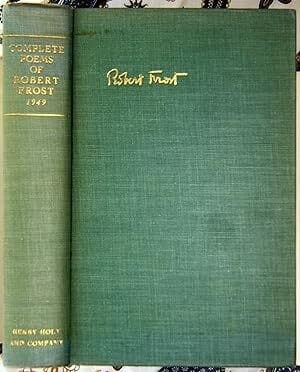
I gave her Frost’s Complete Poems in June of 2001, at the end of her freshman year. It was from my own antiquarian collection, well-worn from my reading and those who had read it before me. In reading Robert Frost, something in her changed. Her face softened, a slight smile breaking through her usual seriousness, her eyes lighting in a way I had not seen before. In that moment, I recognized a familiar experience, the quiet discovery of language that speaks directly to something inside of us. I saw in her a small reflection of myself, finding meaning in words that name what had previously been unspoken.
I was again her teacher in her junior year, and was thrilled to continue our academic journeys together. And then, an incident occurred requiring me to act as both a teacher and mandated reporter. I worried about her safety and hoped she would not feel betrayed by the necessary actions I had taken to protect her. We navigated the incident together, with the school administration’s support, and as we did, she withdrew into herself. Our conversations ended. When I left the school at the end of that academic year, I left without explaining, without saying goodbye. I carried my concern quietly forward alongside the uncertainty of never knowing how her life unfolded after that point.
For more than two decades, I wondered about her, eventually accepting that I might never know how her story continued. In August 2025, the book came back to me almost 3,000 miles away from where I had given it to her.
Inside it was a letter with an explanation and an apology. She didn’t need to apologize – she hadn’t done anything wrong. She had simply trusted me enough to confide in me. She wrote about how she found her footing again and built a future she once could not imagine. She thanked me for seeing her when it mattered, for acting when I had to, and for helping her believe that her life was worth living. The letter did not erase the years of uncertainty, but it transformed them, not into resolution, but into recognition.
Storytelling does not always give us endings. Sometimes it gives us recognition. If we are fortunate enough, it sometimes gives us back something we thought we lost.
Teaching is full of moments we never see finished. We rarely witness how the lives of our students continue beyond the edges of our classrooms. What endures is not the lesson plan, the strategy, or the measurable outcome. The letter did not erase the years of uncertainty, but it illuminated the human core of teaching: recognizing the spark in another person, respecting the private histories students carry, and understanding that careful attention and genuine care, even in seemingly ordinary moments, can shape our lives in profound and lasting ways.

