
The Oaks Center for Educational Advancement


Under the Oaks

A shared space for the exploration of teaching and learning

When Teaching Gets Hard, Reflection Keeps You In It

New teachers don't usually leave because the work is hard.

Work That Informs Practice

Field notes about teacher induction and how staying in the work depends on how teachers interpret what happens when things do not go as planned.

On Reflective Growth

At the end of a hard week, are you asking yourself what you got through, or what you learned?

Why Teacher Induction Matters

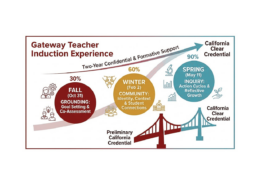
Several years ago, I built a teacher induction program, and that experience taught me as much about what not to do as it did about what was possible. 

Staying Long Enough to Find the Truth

When a student’s behavior pushes your buttons, what helps you pause long enough to respond with curiosity rather than assumption?
an abstract pastel image showing the concept of reaching out an connection

Responding Instead of Reacting

Teaching asks us to remain regulated when others are not. That is hard work, and it is often invisible.

Staying Without Judgment

Steady insistence on listening can reveal that when a classroom becomes a place of safety rather than judgment, honest struggle can surface and real learning can begin.

Accountability, Trauma, and Social-Emotional Check-ins

Field notes about addressing student behavior through accountability and understanding.

Learning Beyond the Moment

The Book That Found Its Way Back considers a complex teaching moment as an opportunity.

The Book That Found Its Way Back

Years earlier, I had given that book to a student. She was quiet, reserved, careful with her words. In our English class, she rarely spoke. Then Robert Frost lit something in her.

Shifting Observation and Understanding

Understanding deepens when reflection is taken up, tested against experience, and shared with others engaged in the work.

Narrative as Professional Practice

Inviting educators to examine experience, elevate voice, and shape professional judgment through shared stories.

Educator Story Submissions

We welcome story-based submissions from teachers, mentors, and school leaders that reflect honestly on practice. We are interested in classroom moments, mentoring experiences, questions that linger, and accounts that examine how identity, context, and decision-making shape teaching and learning.

Submissions should be grounded in lived experience and written with care for students, colleagues, and communities. We are less interested in polished success stories than in thoughtful reflection that opens space for learning and conversation.

Student Story Submissions

We invite submissions from students, past and present, who wish to reflect on their learning experiences. We are interested in moments of growth, challenge, belonging, misalignment, or change, and in how relationships, identity, and classroom culture shaped those experiences.

Submissions may take the form of short essays, narratives, or reflective pieces. We value honesty, clarity, and care over polished presentation.

Editorial Note on Student Submissions

Student submissions are reviewed with particular care. We recognize the power imbalance that can exist between students and institutions, and we are committed to publishing student voices responsibly and ethically.

Identifying details may be edited or withheld. Our aim is to publish reflection that contributes to understanding teaching and learning as lived experience, while protecting the dignity and well-being of all involved.